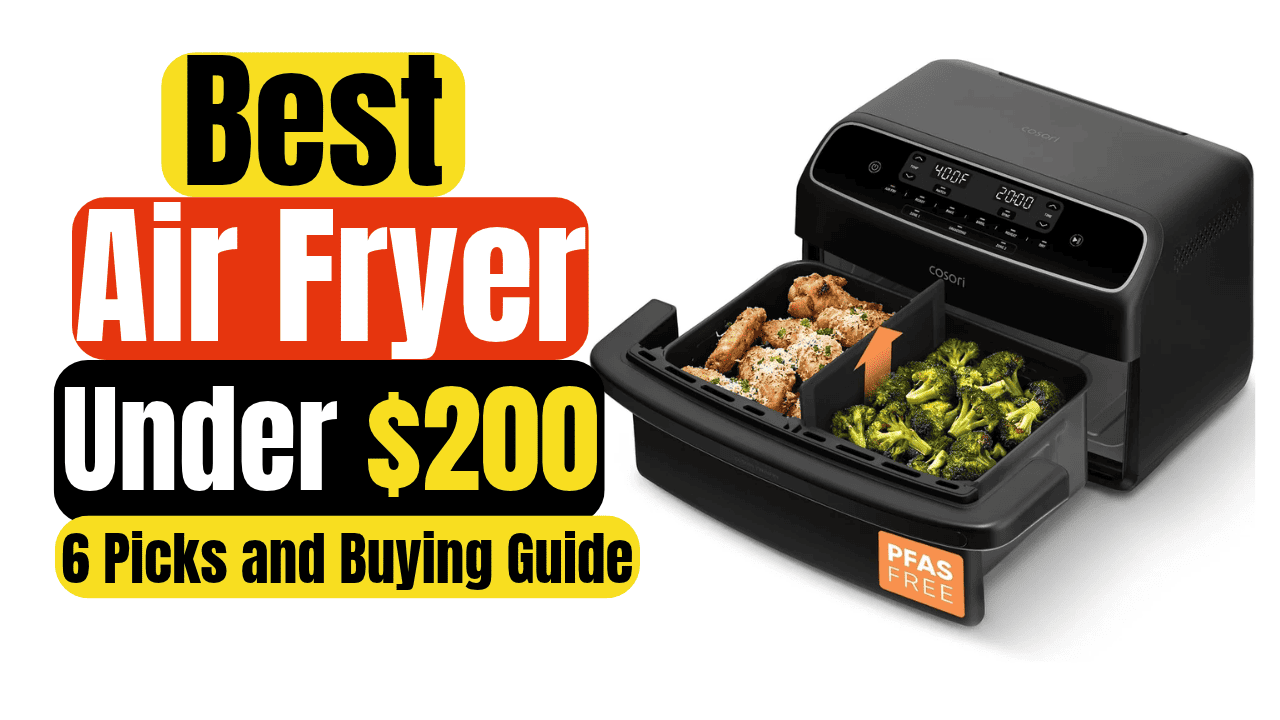
Finding the best air fryer under $200 is not about choosing the model with the largest basket or the most presets. The right choice depends on how you cook, how many people you cook for, and whether you prefer a traditional basket-style air fryer or a dual basket model with dual zone cooking.
Capacity, airflow, temperature range, basket construction, and everyday convenience matter much more than a long list of digital presets. This is an honest review, so I point out the downsides of each model too, from bulky footprints to complicated settings.
For shoppers looking for the best air fryer under $200, a 5.5- to 6-quart digital model from brands like Ninja, COSORI, Cuisinart, or Instant can provide a practical balance of cooking performance, capacity, and price. Larger families may do better with an 8- to 10-quart model with two baskets.
The best air fryer under $200 can offer excellent everyday cooking performance, but it’s important to compare regular prices with seasonal discounts before making a final purchase. Always confirm the current price before buying.
Quick Answer: What Is the Best Air Fryer Under $200?
- Best overall and for everyday cooking: Ninja Air Fryer Max XL AF161
- Best for large families: Ninja Foodi DualZone XL DZ401
- Best flexible basket design: COSORI TWINFRY 9-Qt
- Best for temperature monitoring: Tastee Ceramic 5.5-Qt
- Best for large single batches: KINSING 10.6-Qt
- Best mid-size flexible option: Ninja Foodi FlexBasket DZ071
6 Air Fryers Under $200 Worth Considering
I chose six models with different designs rather than six near-identical appliances, so you can compare by household size and cooking needs.
1. Ninja Foodi DualZone XL DZ401 (10-Qt)
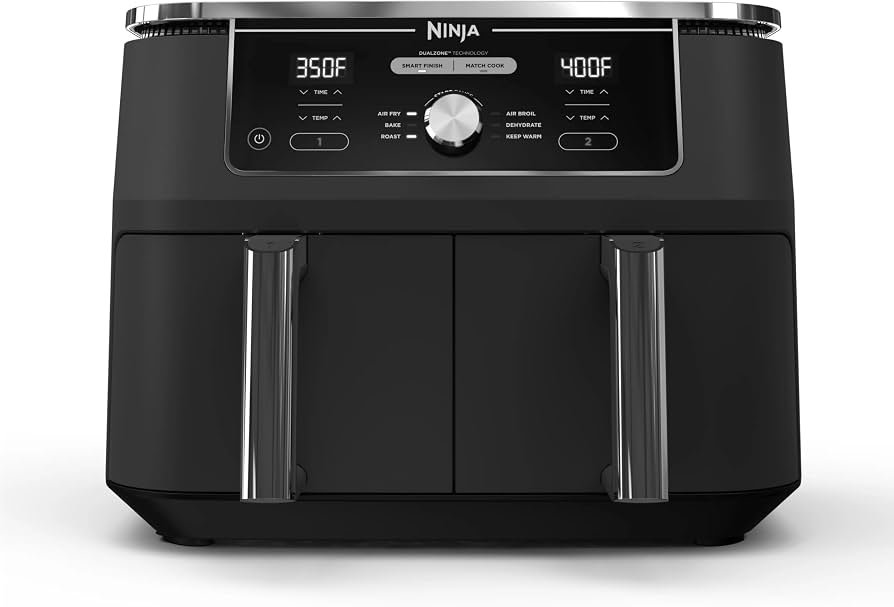
Designed for households that cook multiple foods at once. Two independent 5-quart baskets give 10 quarts of combined capacity, and each basket can run different settings. You can air fry wings in one and roast potatoes in the other.
Features
- 10-quart total capacity, two independent 5-quart baskets
- Smart Finish (sync finish) for coordinating different cooking times
- Match Cook for using the same settings in both baskets
- Six functions: air fry, air broil, roast, bake, reheat, dehydrate
- Maximum temperature 450°F
- Nonstick crisper plates
- One-year limited warranty
What I like: You don’t have to wait for one food to finish before starting another, which shortens the time for a family dinner. Smart Finish helps when foods need different temperatures or durations, and Match Cook suits meal prep or party snacks. Each compartment stays fully usable, which helps food cook evenly.
Things to consider: It is bulky and not ideal for a small kitchen. Cleaning takes more effort with two baskets and two crisper plates. Its standard price is above $200, so look for a deal. You also cannot treat both baskets as one large compartment.
Best for: Large families, meal prep households, and anyone who regularly cooks two different foods together.
2. COSORI TWINFRY 9-Qt (CAF-TF901-KUS)
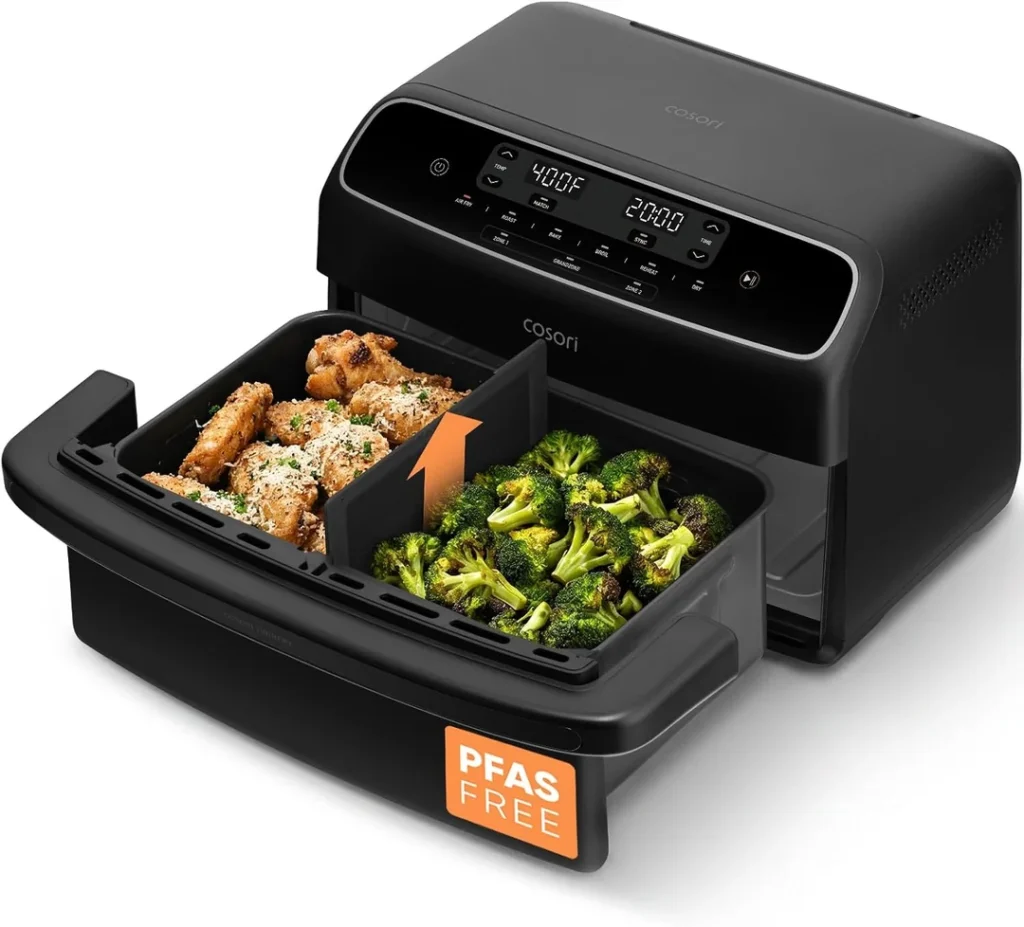
For buyers searching for the best air fryer under $200 with flexible cooking space, the COSORI TWINFRY stands out because its removable divider allows both single-basket and dual-zone cooking. A removable divider lets you use it as one 9-quart basket or as two 4.5-quart zones, which suits everything from weeknight dinners to holiday cooking.
Features
- 9-quart total capacity
- 1,750 watts
- Maximum temperature 465°F
- PFAS-free ceramic nonstick coating
- Dishwasher-safe basket
- Match and Sync functions
- Six cooking functions
What I like: The divider is the standout feature. Use the full space for a whole chicken or a big batch of vegetables, or split it for a main and a side. The ceramic coating appeals to buyers who want a PFAS-free surface, and Sync and Match make coordinating foods easy.
Things to consider: It is bulky, and its depth of roughly 19 inches is worth checking before you order. With the divider in, each zone is only 4.5 quarts. It is also a newer design than established Ninja models, so long-term durability is less proven.
Best for: Families of four to five who want both single-basket and dual-zone cooking.
3. Tastee Ceramic 5.5-Qt Air Fryer
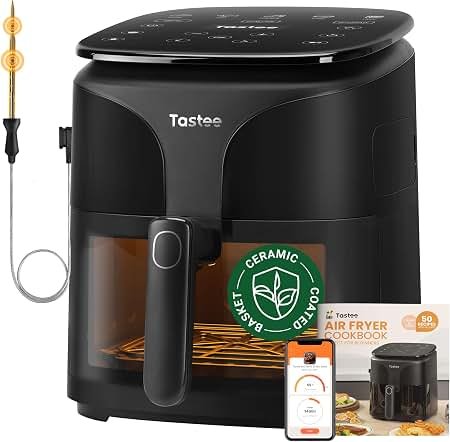
For anyone comparing the best air fryer under $200 with advanced cooking features, the Tastee Ceramic offers a different approach through its built-in temperature probe and adjustable cooking controls. Its main attractions are a ceramic-coated basket and a dual-sensor smart probe, which makes it a good test case if you wonder whether a smart air fryer is worth it.
Features
- 5.5-quart capacity
- 1,700 watts, 120V
- Maximum temperature 450°F
- Dual-sensor built-in temperature probe
- 24 one-touch presets
- Eight cooking functions, including dehydrate
- Optional smartphone app control
- Ceramic-coated basket
What I like: The probe lets you monitor the internal temperature of thick foods instead of relying only on time, which helps with chicken, pork, and steak. The 5.5-quart basket balances capacity and counter space, and physical controls mean you don’t need the app for everyday use.
Things to consider: It is a single-basket model, so it cannot cook two foods independently. Its price is toward the high end for a 5.5-quart machine, and the smart features may be overkill if you never use them. The probe only works well when inserted correctly, and you still need to follow safe food-temperature guidelines.
Best for: Couples and small families who cook a lot of meat and want temperature monitoring.
4. Ninja Air Fryer Max XL AF161 (5.5-Qt)
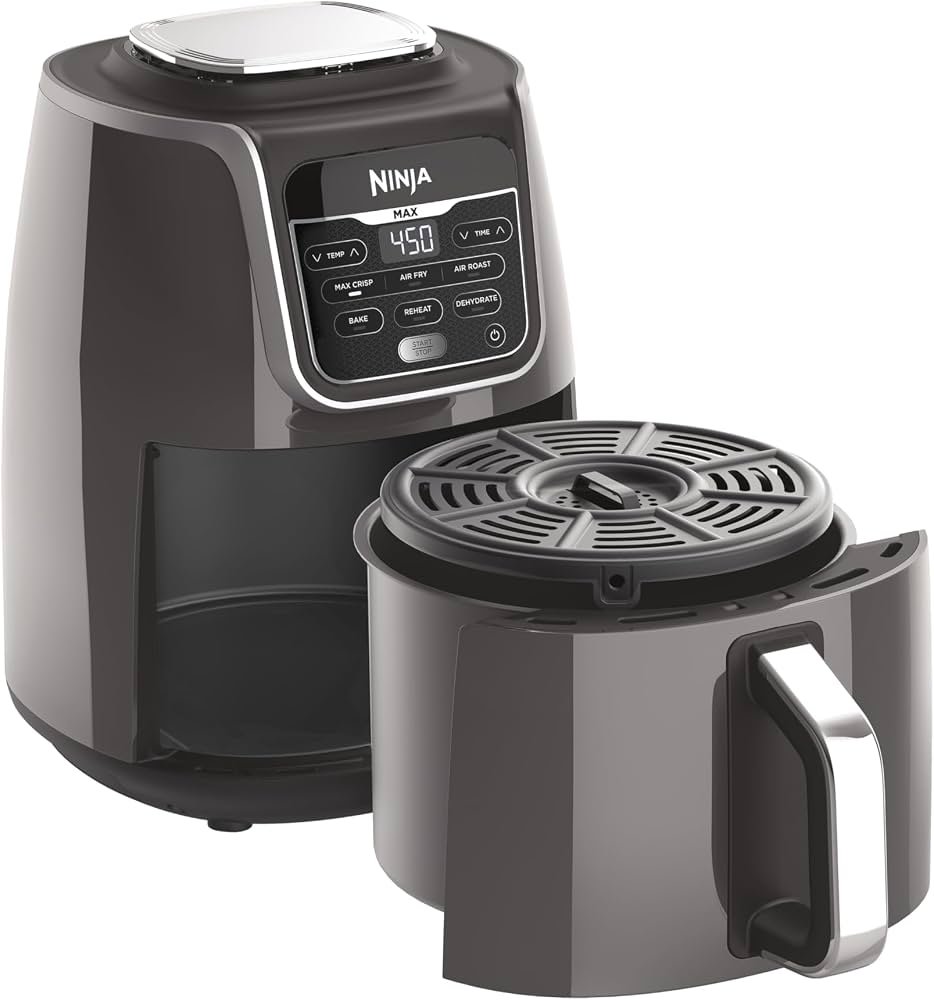
One of the more straightforward options here. Instead of smartphone connectivity or complicated arrangements, it offers practical features in a familiar single-basket design. Its Max Crisp function helps with frozen foods like fries and wings.
Features
- 5.5-quart capacity
- 1,750 watts
- Temperature range 105°F to 450°F
- Seven cooking functions
- Max Crisp technology
- Air broil and dehydrate
- Ceramic-coated nonstick basket and crisper plate (per listed specifications)
- One-year limited warranty
What I like: It is user-friendly and doesn’t make you learn a complicated interface. Max Crisp is great for frozen fries and wings. The wide basket matters too, because food needs exposure to circulating hot air, and a larger advertised capacity doesn’t guarantee better cooking space. It also has a longer product history, so more long-term reviews exist than for newer alternatives.
Things to consider: One compartment only, so a dual-zone model is more convenient if you cook a main and a side together. 5.5 quarts gets restrictive for five or more people. Some newer models offer Wi-Fi or voice assistant support and more flexible baskets, though these aren’t essential.
Best for: Two to four people who want a dependable single-basket air fryer.
5. KINSING 10.6-Qt Oilless XL Air Fryer
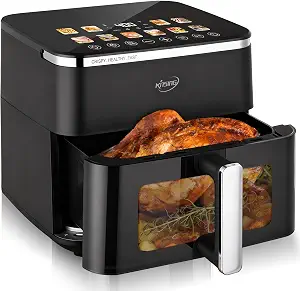
The KINSING 10.6-Qt is worth considering when searching for the best air fryer under $200 for large portions, especially if you prefer one spacious cooking compartment instead of two separate baskets.Unlike the DZ401, it has one large 10.6-quart compartment, plus a viewing window so you can watch food without opening the basket.
Features
- 10.6-quart capacity
- 1,500 watts
- Maximum temperature 400°F
- Nine cooking presets and a Keep Warm function
- Color digital touchscreen
- Viewing window with interior light
- Shake reminder
- Stainless steel inner cavity
- Dishwasher-safe square nonstick basket
What I like: The large single area suits households that cook big batches of one food. The viewing window is convenient, and the shake reminder helps fries and other small items cook evenly.
Things to consider: Capacity isn’t the only factor in performance. Its 400°F maximum is lower than the 450°F or more on several competitors, and 1,500 watts is lower than most models here. Check the seller’s warranty, replacement-part availability, and coating information, since these are not always clearly explained. I could not establish a reliable current price, so verify it before comparing.
Best for: Large households and batch cooks who want one spacious compartment and a viewing window.
6. Ninja Foodi FlexBasket DZ071 (7-Qt MegaZone)
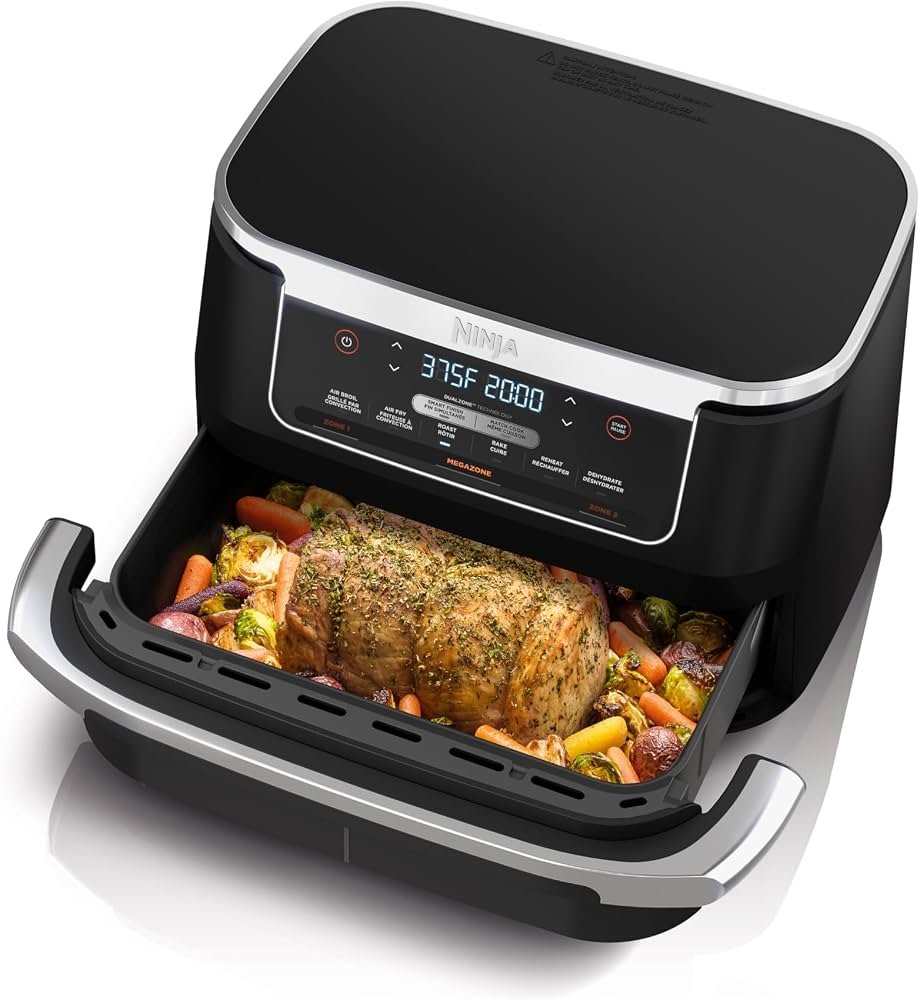
Among the options worth considering for the best air fryer under $200, the Ninja Foodi FlexBasket DZ071 offers a useful middle ground between a traditional single-basket appliance and a larger dual-zone model.A removable divider switches it between one 7-quart MegaZone and two 3.5-quart compartments, without the size of a 10-quart model.
Features
- 7-quart total capacity
- Removable divider, two 3.5-quart zones
- Smart Finish and Match Cook
- Six cooking functions
- Maximum temperature 450°F
- Nonstick, dishwasher-safe basket and crisper plates
- One-year limited warranty
What I like: Use MegaZone for a large quantity of one food, or the divider for two different foods. The sync features help when foods have different requirements but need to finish together. Compared with the DZ401, it is more manageable where counter space matters.
Things to consider: With the divider installed, each 3.5-quart zone is smaller than a DZ401 basket. Wattage specifications vary between listings, so check the exact product specification before buying.
Best for: Three to five people who want flexible single- and dual-zone cooking without a very large appliance.
Side-by-Side Comparison
| Model | Capacity | Max Temp | Wattage | Basket Design | Main Advantage |
|---|---|---|---|---|---|
| Ninja DZ401 | 10 Qt | 450°F | About 1,690W | Two independent baskets | Large dual-zone capacity |
| COSORI TWINFRY | 9 Qt | 465°F | 1,750W | Single or dual | Removable divider |
| Tastee Ceramic | 5.5 Qt | 450°F | 1,700W | Single basket | Smart temperature probe |
| Ninja AF161 | 5.5 Qt | 450°F | 1,750W | Single basket | Straightforward operation |
| KINSING | 10.6 Qt | 400°F | 1,500W | Large single compartment | Viewing window, capacity |
| Ninja DZ071 | 7 Qt | 450°F | Varies | Single or dual | Flexible MegaZone design |
Specifications can vary by product revision, so verify the exact model number before purchasing.
Which Model Fits Which User?
There is no reason to buy a 10-quart air fryer for one or two people, and a compact 4-quart model gets frustrating for a family that cooks large portions.
| Model | Main Limitation | Ideal User |
|---|---|---|
| DZ401 | Large footprint | Large families |
| TWINFRY | Needs counter space | Families of four to five |
| Tastee | Single basket | Meat-focused cooks |
| AF161 | Limited family capacity | Two to four people |
| KINSING | Lower maximum temperature | Batch cooking |
| DZ071 | Smaller divided zones | Three to five people |
Quick decision guide
- One to four people: The Ninja AF161 is a sensible, straightforward choice. Consider the Tastee if the smart probe matters to you.
- Three to five people: The Ninja DZ071 balances capacity and flexibility.
- Four to five people: The COSORI TWINFRY if you want to switch between one large basket and two zones.
- Five or more: The Ninja DZ401 offers two full-size baskets, while the TWINFRY is a flexible 9-quart alternative.
- Large single batches: The KINSING, if its specifications, warranty, and price work for you.
All six models above are US-market 120V appliances.
Cheaper Alternatives Worth Comparing
If you don’t need a large dual-zone appliance, these are good value options. They are alternatives, not replacements for the six reviews above, and prices are approximate.
| Requirement | Model | Approx. Price |
|---|---|---|
| Best all-rounder | COSORI TurboBlaze 6-Qt | Around $100 |
| Compact family option | Ninja AF161 Max XL | $120–$150 |
| Two foods at once | Ninja DZ201 Foodi (8-Qt) | $150–$200 |
| Stainless-steel styling | Cuisinart AIR-160NAS | Under $150 |
| Small kitchen | Instant Vortex Plus 4-Qt | Under $100 |
- COSORI TurboBlaze 6-Qt: Traditional basket style with a convection fan, about 1,725 watts, and a PFAS-free ceramic coating. Enough room for everyday meals without the footprint of a dual-zone machine.
- Ninja DZ201 Foodi (8-Qt): Two 4-quart baskets with Sync and Match. Like all dual-basket designs, it needs more storage space and cleaning.
- Cuisinart AIR-160NAS: A traditional stainless steel look and a simple design for people who don’t want complicated controls.
- Instant Vortex Plus 4-Qt: Ideal for individuals and couples with small portions and limited counter space.
How Much Should You Actually Spend?
A more expensive air fryer doesn’t automatically produce better food. Dual zone cooking makes sense if you often cook two dishes, but offers little if you usually cook one small portion.
| Budget | What You Typically Get | Best For |
|---|---|---|
| Under $60 | Compact 2–4-quart models | One person |
| $80–$120 | 4–6-quart capacity, digital controls | Couples, small families |
| $120–$160 | Larger baskets, more functions | Frequent cooks |
| $160–$200 | Larger and dual-zone models | Families, meal prep |
If you cook for one or two people, a $100 air fryer can be plenty. Spend closer to $200 only when you need extra capacity, a second basket, or a feature that improves your routine. The extra money buys capacity, flexibility, and sometimes convenience, not automatically crispier food.
What Size Air Fryer Do You Need?
Don’t choose by advertised quart capacity alone. Basket shape and usable cooking area matter too, and a wider basket lets food spread into an even layer for consistent browning.
| Household Size | Suggested Capacity |
|---|---|
| One person | 2–4 quarts |
| Two people | 4–5 quarts |
| Three to four people | 5.5–6 quarts |
| Five or more | 8 quarts or dual-zone |
If you cook larger portions, moving up one size makes things easier. Larger models suit entertaining, holiday cooking, and meal prep, but cost you counter space. A whole chicken generally needs about 6 quarts or more.
Basket vs. Dual-Zone vs. Oven-Style
| Type | Advantages | Disadvantages | Best For |
|---|---|---|---|
| Single basket | Simple, affordable, compact | One compartment | Singles, couples |
| Dual-zone | Two foods at once | Larger, more cleaning | Families |
| Oven-style | Multiple racks, bigger area | Bulky, harder to clean | Larger meals |
| Multi-cooker with air-fry lid | Many functions | Air-frying varies | Space-saving kitchens |
When choosing the best air fryer under $200, a traditional basket design is often the practical option for everyday meals, while dual-zone models make more sense for households that regularly prepare multiple dishes together. If you regularly cook a main and a side together, dual-zone can justify the extra cost.
Air fryer toaster oven vs. basket air fryer: A toaster oven combines convection cooking with racks, so it can bake, roast, broil, toast, and air fry, and some models reach about 26 quarts. It suits replacing an oven for small meals, multi-rack cooking, and sheet-pan dinners. A basket model is more compact, heats quickly, and is easier for frozen fries, wings, and small batches. Pick the toaster oven for versatility and larger meals, and the basket for simplicity and a smaller footprint.
Nonstick Coatings and PFAS
Most baskets use nonstick surfaces. Some use PTFE-based coatings, while others advertise ceramic coatings free from certain PFAS chemicals (often called PFOA-free or PFAS-free). If you want to limit PFAS exposure, look for clear manufacturer documentation rather than broad marketing claims.
Tips to protect the coating:
- Avoid metal utensils that scratch.
- Don’t use aerosol cooking sprays unless the manufacturer allows them.
- Clean with a soft sponge.
- Follow the dishwasher recommendations.
- Replace baskets with visible damage or flaking.
Ceramic coatings can wear with use, so check whether the warranty covers the basket itself.
Features That Actually Matter
Airflow and wattage: Airflow (marketed as rapid air technology or a powerful convection fan) affects cooking consistency. Most household models run between 1,400 and 1,800 watts, but When evaluating the best air fryer under $200, look at how wattage works alongside airflow, basket shape, and usable cooking space, since these factors collectively influence cooking results. Basket design and usable space matter too.
Temperature range: A wider range gives more flexibility. Up to 450°F (about 230°C) is useful for crisping, while lower settings suit reheating and dehydrating.
Basket quality: Look for a sturdy design, a comfortable handle, a removable, easy-to-clean crisper plate, and a coating that is easy to maintain.
Dishwasher-safe parts: These save time if you use the air fryer several times a week, but follow the manual’s instructions.
Controls and presets: Twenty or thirty presets are not necessarily an advantage. A simple interface with adjustable time and temperature is often more practical. Useful extras include a preheat function, a shake reminder, and preset memory.
Warranty and support: Check the terms for the basket, heating components, and accessories separately, since coverage may differ. Reading customer reviews and the manual can reveal common problems.
Noise and counter space: Fans make some noise, and a few models are loud at high speed. Measure your countertop and the height under your cabinets, and leave the manufacturer’s ventilation clearance, especially for large models like the DZ401 and TWINFRY.
Is a Smart Air Fryer Worth It?
Smart models add app control, a smart display, and sometimes Wi-Fi or voice assistant support. If you’re looking for the best air fryer under $200, don’t make smartphone connectivity a deciding factor unless you genuinely need remote monitoring or app-based cooking controls. A built-in temperature probe is the smart feature I find most practical, because it improves doneness for meat. If you mostly cook frozen foods and vegetables, skip the smart features and spend the difference on capacity.
Safety
- Look for safety certifications appropriate to your region and check product recall databases.
- Never block the ventilation openings.
- Place the appliance on a stable, heat-resistant surface.
- Keep parchment paper and foil secured so they can’t reach the heating element.
- Avoid overcrowding the basket.
- Follow the manufacturer’s cleaning and maintenance instructions.
Cooking starchy foods at very high temperatures can form acrylamide, so aim for golden-yellow rather than dark-brown potatoes.
Do Air Fryers Use a Lot of Electricity?
They draw considerable power, but cooking times are short, which makes them efficient for small meals. Estimate consumption with: Energy (kWh) = Watts ÷ 1,000 × Hours. A 1,700-watt air fryer running for 20 minutes uses about 0.57 kWh. Multiply by your local electricity rate for the cost. Actual use depends on temperature, duration, preheat time, and how often the heating element cycles. For small meals, an air fryer is more practical than heating a full-size oven.
How to Buy Smart
- Compare prices across sellers: Deals vary considerably.
- Check price history: Don’t assume every sale is real savings.
- Watch seasonal promotions: Black Friday, Cyber Monday, Prime Day, and holiday deals can offer useful discounts.
- Confirm the exact model number: Similar-looking models can have different specifications.
- Review the return policy.
- Check warranty coverage: Make sure the seller provides a valid warranty.
- Buy from authorized sellers: This makes support and warranty claims easier.
Also check independent, top-rated reviews rather than relying only on star ratings. A useful review explains its testing method, conditions, and results, and is honest about cons as well as pros.
Buying Around the World
The $200 budget is based on US pricing, but the same principles apply elsewhere. The main differences are electrical requirements, pricing, availability, and warranty coverage.
| Region | What to Consider |
|---|---|
| United States | 120V models, warranties, UL or ETL listings |
| United Kingdom | 230V appliances, local safety requirements |
| Canada | Local availability and warranty coverage |
| Australia | Local electrical standards and available models |
| South Asia and Middle East | 220–240V compatibility, local service availability |
Important voltage warning: Most models in this guide are US-market 120V appliances. Do not connect them directly to a 220–240V outlet. Buy an appliance designed for your local supply, and check that replacement baskets, accessories, and warranty support are available in your country.
Common Buying and Cooking Mistakes
Most complaints about soggy food, dry results, or long cooking times come from these habits:
- Buying a basket that’s too small: Consider your usual portion sizes.
- Overcrowding: Too much food restricts airflow and cooks unevenly.
- Expecting identical results from every model: Basket shape, airflow, and heating differ.
- Skipping food prep: Patting ingredients dry and adding a little oil improves crisping.
- Using unsuitable sprays: Some damage nonstick coatings.
- Ignoring cleaning: Grease buildup causes odors and smoke, and a hard-to-clean unit gets used less.
- Paying for unnecessary features: Choose functions based on your real habits.
Air Fryer vs. Other Appliances
An air fryer is usually faster and more compact than a convection oven, while the oven handles bigger batches. An air fryer vs toaster oven choice depends on whether you want a dedicated basket or a multi-rack appliance. As a deep fryer alternative, an air fryer is good for cooking with less oil and fewer calories, though it won’t replicate deep-fried texture exactly. A pressure cooker does a different job entirely (braising, stews, soups). Consider your existing appliances before buying another.
How to Get Great Results From Day One
- Place the appliance on a stable, heat-resistant surface with proper ventilation clearance.
- Preheat when the manufacturer recommends it.
- Pat ingredients dry before cooking.
- Add a small amount of oil when appropriate. A little oil often improves crispiness.
- Arrange food in an even layer.
- Shake or flip halfway through when needed.
- Check meat with a food thermometer.
- Let the basket cool before cleaning.
For frozen fries, about 400°F for 12–18 minutes is a reasonable starting point, but time varies with fry thickness, basket capacity, and manufacturer instructions. Check the cooking chart in your manual for other foods. Many models can also bake, roast, broil, dehydrate, and reheat leftovers.
Frequently Asked Questions
What is the best air fryer under $200?
For most people, the Ninja Air Fryer Max XL AF161 is the best everyday choice, while the Ninja Foodi DualZone XL DZ401 is best for larger households. It depends on household size, counter space, and how many foods you cook at once.
Is a $200 air fryer worth it over a cheaper one?
It can be if you need large capacity, dual-zone cooking, or specialized features. Someone cooking for one or two may get excellent value from a much cheaper model.
Dual basket or single basket?
Dual basket is more convenient for two different foods at once. Single-basket models are simpler, smaller, and cheaper.
What size is best for a family of four?
A 5.5- to 6-quart model works for many families of four, while larger households may prefer 8 quarts or a dual-zone appliance.
What features matter most?
Usable capacity, airflow, temperature range, basket quality, dishwasher-safe parts, and warranty. Presets and app control matter far less.
Is air frying healthier than deep frying?
It requires considerably less added oil, but overall nutrition still depends on the ingredients and preparation.
Are air fryer coatings safe?
Use the appliance as instructed and avoid damaging the coating. If you want a PFAS-free surface, check the manufacturer’s exact material documentation.
How long does an air fryer last?
There is no guaranteed lifespan. It depends on build quality, frequency of use, maintenance, and the condition of the basket and heating components.
Can I use foil or parchment paper?
Some models allow it, but follow the manufacturer’s instructions. Secure it under the food and never let it block airflow or touch the heating element.
Which brand lasts the longest?
No manufacturer can guarantee that. Compare warranty coverage, replacement-part availability, and long-term customer feedback.
Basket or oven-style?
Basket models are compact and convenient for smaller portions. Oven-style models offer racks and more space for larger meals.
The Bottom Line
My biggest recommendation is not to buy an air fryer just because it has more presets, a bigger touchscreen, or an impressive advertised capacity. Focus on cooking area, airflow, basket construction, cleaning requirements, and features you will genuinely use. Ultimately, the best air fryer under $200 is the one that matches your cooking habits, provides enough usable space, and delivers the features you will actually use without stretching your budget unnecessarily. Before buying, confirm the exact model number, current price, electrical compatibility, coating details, and warranty coverage.
Kabeer is the creator of the airfryer guide.com, a specialized site focused exclusively on air fryer buying guides. From compact basket models to dual-zone and oven-style air fryers, the blog covers nothing but air fryers. Every single article is built around deep personal experience and hands-on cooking tests, blended with manufacturer specs and rider feedback. To maintain strict honesty, any unverified performance claim or figure is instantly flagged.